When I was eight years old, I set up a little card table on the front lawn to sell my drawings to the neighbors. I wanted to raise money to buy myself a piano. My grandmother played jaunty old-fashioned tunes on her piano, and I was fascinated with how her fingers flew over the keys. I was sure I could learn to do the same. It seemed to be about speed. As long as my fingers moved fast enough across the keys, I decided, the songs would come out.
But I only made a dollar fifty on the sale, and fifty cents of that was from one of my baby brother’s cheaper scribble drawings he had contributed to the cause. I waited outside an extra hour for a neighbor who said he would be back with money for one of my more professional pictures priced at $1.75 but never returned.
My grandmother took pity on me and shipped her piano across town to our house. She didn’t even ask for one of my drawings in exchange.
And my mom enrolled me in lessons with Mrs. Johnson. Mrs. Johnson taught her students memorization, not how to read music. I learned some of the chords but suffice it to say I was not a precocious student of piano. When I managed to hit the right keys, I would do it a second time to get the most out of it. When I was practicing at home, desperately trying to remember the songs, my mother would call out from the next room, “Stop pounding on the piano!” I was still semi-hopeful that flying fingers would revive my grandmother’s old songs and I could leave the beginner songbook behind.
But apparently playing a song required more than speed. This was a bit of a shock and not what I had imagined.
A few months later, my mother dropped off my sister with me for lessons, and during my sister’s half hour (it would turn out neither of us had any musical talent) I discovered a paperback copy of Jonathan Livingston Seagull by Richard Bach on the wooden coffee table.
I read Jonathan Livingston Seagull every week thereafter. JLS is a slim novella, not even a hundred pages. I became so familiar with the text, I could speed read the whole thing in the half hour of my sister’s lesson. Her plunking and Mrs. Johnson’s instructions faded away in that time.
Neither of us stuck with piano much longer than that first year, but Jonathan stayed with me. Jonathan Livingston Seagull, rising above all the other seagulls, was my new model for flying, even more impressive than my grandmother’s jaunty tunes and flying fingers. That was what I got out of piano lessons, though the piano itself went unplayed in our house for years after. I felt a little guilty for taking it from my grandmother. Now when we visited her house she couldn’t play for me.
I should mention that I was a very literal child. I had no concept of allegory or “new age” books and ideas. Jonathan Livingston Seagull was about a bird who loved to fly and stretched his limits and then taught others to reach for more for themselves.
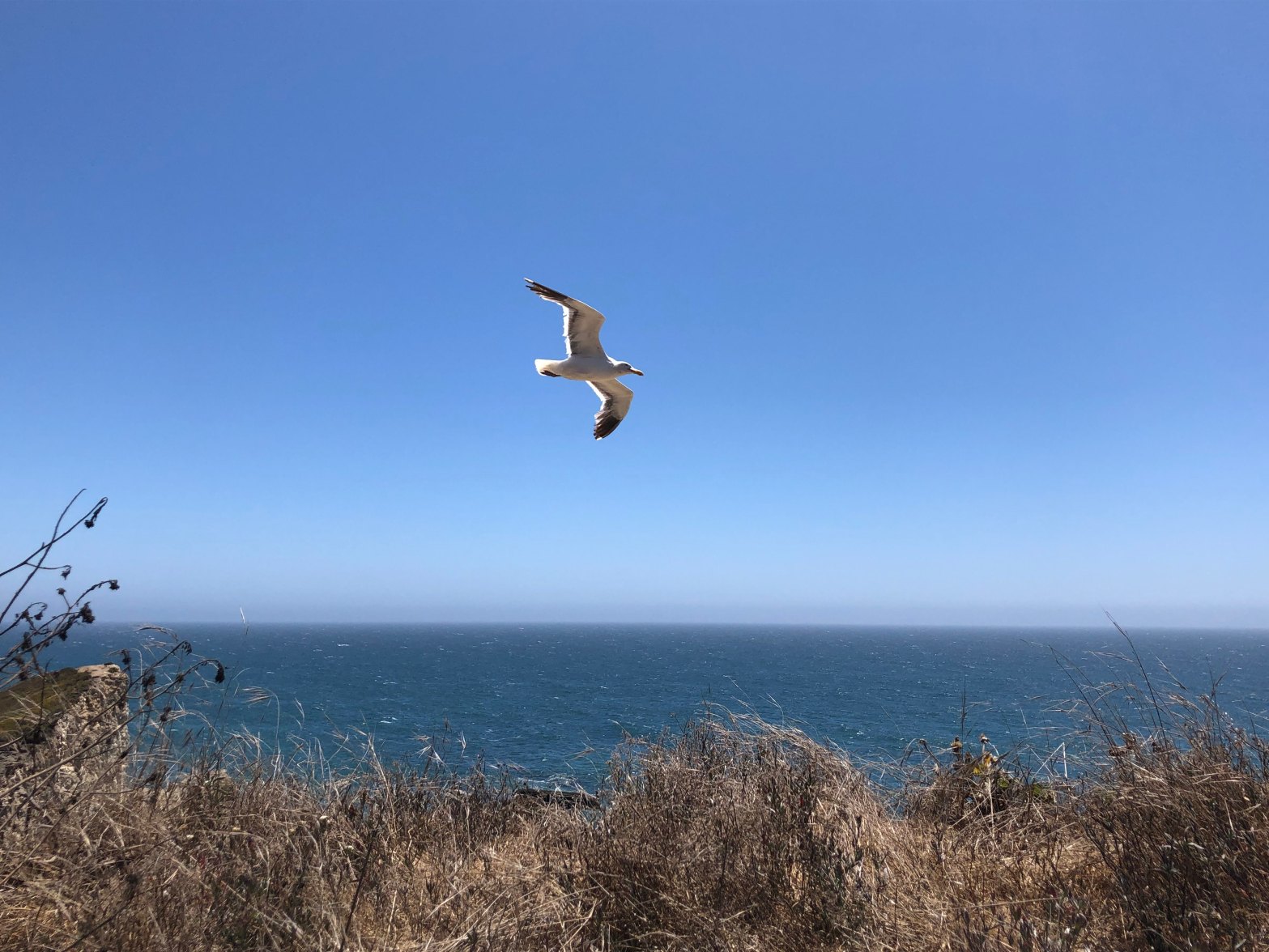
Jonathan was different from other birds in his flock: For most gulls, it is not flying that matters, but eating.
If I was not going to become a famous pianist or an artist, what would I be? I couldn’t be a seagull like Jonathan, but could I, too, learn to fly? Well, I did have my bike.
My favorite time to ride my bike was dusk when most people were still in their houses eating dinner. I would eat quickly and ride the circles of our suburban neighborhood, reveling in the wind in my hair, the flying streamers from my banana bike handlebars, and the voices floating out of the houses, with just me inhabiting that magical liminal space of evening. Everything even and squared away, for that moment between breaths, between day and night.
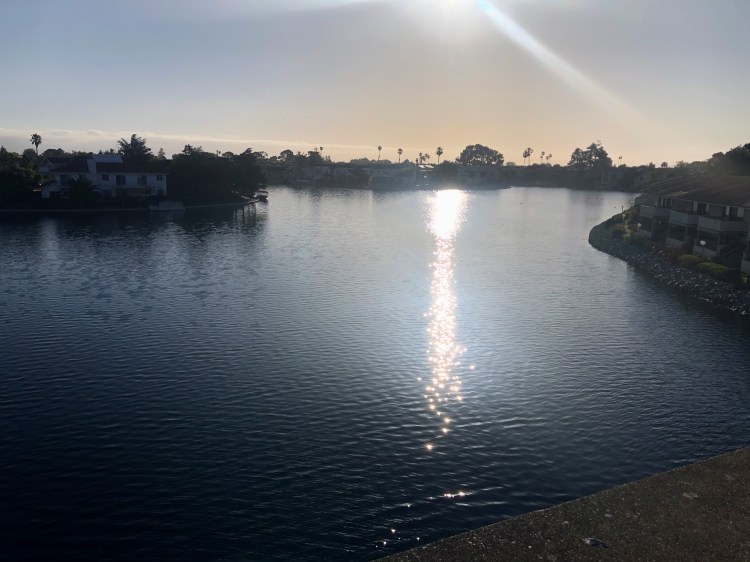
“Heaven is not a place, and it’s not a time. Heaven is being perfect. He spoke of very simple things- that it is right for a gull to fly, that freedom is the very nature of his being, that whatever stands against that freedom must be set aside, be it ritual or superstition or limitation in any form.”
I rode a bike throughout my childhood. Along the Erie Canal, then in college, then New York City, and later in the San Francisco Bay Area, where I eventually married a man named Jonathan.
There are many ways to learn to fly. My bike was my first, and is still my favorite. My bike club friends understand this without explanation. For the rest of you who don’t get it, here’s what you need to know.
Biking is exercise but it’s also communing with nature.
Biking is hard. It involves climbing hills, battling headwinds, avoiding traffic, keeping your bike tuned up, staying hydrated, carrying snacks and supplies, keeping up with the group, etc. But after you climb those hills, you get to float and fly down the other side—effortless, your birthright, not just scrabbling to survive. That’s the part I forget if I only do flat rides for a while and the hills seem daunting. It’s the other side, the flying side. You have to climb up first. You have to leave the squabbling, unenlightened gulls behind and hope they will join you someday.
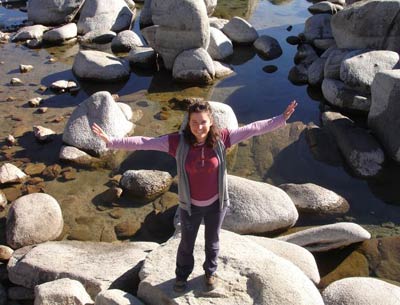
Biking is the flying of the fingers over the keys producing jaunty music.
Biking is art.
Biking is love.
It’s nice to remember that, even on the days when I’m not feeling it. It’s still there, just like Jonathan Livingston Seagull says.
Our cycling club recently lost a member to a bike accident. He slipped and fell on some railroad tracks on a rainy morning at the start of a 200K ride and the truck behind him couldn’t stop in time. He died instantly. Peter Grace. We had been riding together just the week before on the Monday Morning Java Jive group ride, and talked mostly about safety, something he took very seriously. At one point a car was taking a fast corner and coming too close for comfort and he positioned himself on the outside to protect me. He checked that I was okay after the car went by.
On the first Java Jive without him, a memorial ride with several groups coming together for a break at our group’s usual Starbucks, I felt Peter’s presence soaring above us. I invited him to come along on the ride, and he did, all fifty miles of it. I thought of Jonathan Livingston Seagull, and how he transcended the boundaries of this earth. Peter, fly free, fly free.
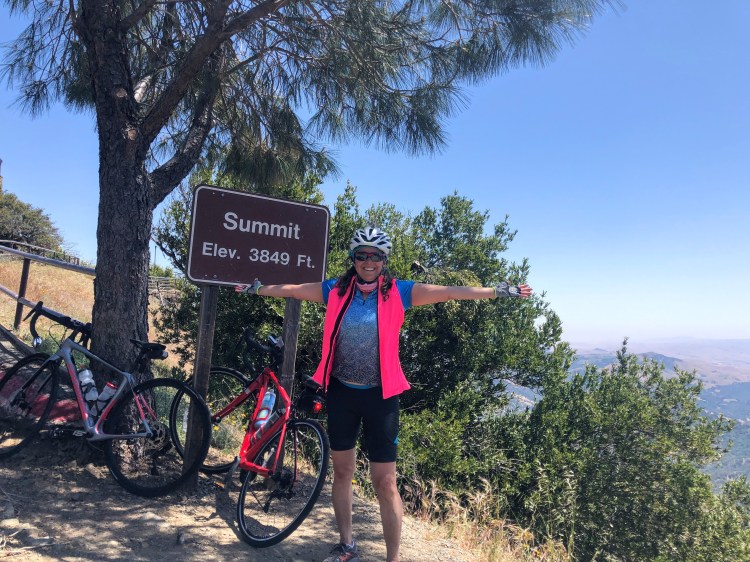
But one of the many ways we humans can fly.
Here’s a Neil Diamond song from the movie version of JLS for your listening pleasure. I think it really captures the feel of the book.
“Be”
Lost
On a painted sky
Where the clouds are hung
For the poet’s eye
You may find him
If you may find you
There
On a distant shore
By the wings of dreams
Through an open door
You may know him
If you may be
As a page that aches for a word
Which speaks on a theme that is timeless
While the Sun God will make for your day
Sing
As a song in search of a voice that is silent
And the one God will make for your way
 Lisa Meltzer Penn
I LOVED your story. It brought back wonderful memories of Grandma bouncing back & forth across the piano bench, her fingers flying across the keys. How I wished that all those years she made me take lessons, that I could play just 1 song as effortlessly as she did.
Did you know that Tina’s mother was a concert pianist? The music genes passed over her & her brothers too
LikeLike
That’s cool — I didn’t know. They sure skipped a whole bunch of us!
LikeLike
What a beautiful essay. It took me on a journey through my own life: my love of art, a desire to play the piano but settling for the guitar because we had no room for one in the living room, flying down the road on my $25 used Schwinn bike that I purchased with my own money at age eight, and Neil Diamond’s song that somehow always makes me cry. Good writing can always move me. Thanks for sharing!
LikeLike
Love this, Lucy. Kindred spirits. I’m playing “Be” right now.
LikeLike
You are such a beautiful writer! Your words touch me. So sorry for your loss, bless his heart and yes I see him flying!
Maurine Killough
You are not IN the Universe you ARE the universe—an intrinsic part of it.
Ultimately you are not a person, but a focal point where the universe is becoming conscious of itself. What an amazing miracle.—Eckhart Tolle
Smilingeyestribe.com
Iwritemyself.worpress.com
LikeLike
Thank you, Maurine. I’ll look for your post — we seem to publish around the same time mostly. xo
LikeLike
Lisa,
You have learned to play the piano, but you may not know it yet.
Please pass me the Kleenex, this was beautiful.
Thanks,
Tom Schnurbusch
LikeLike
Awwwhh. Thank you, my friend.
LikeLike
I would add: you fly with words. May we all be blessed enough to find our particular ways to fly. I’m so happy you have found yours.
LikeLike